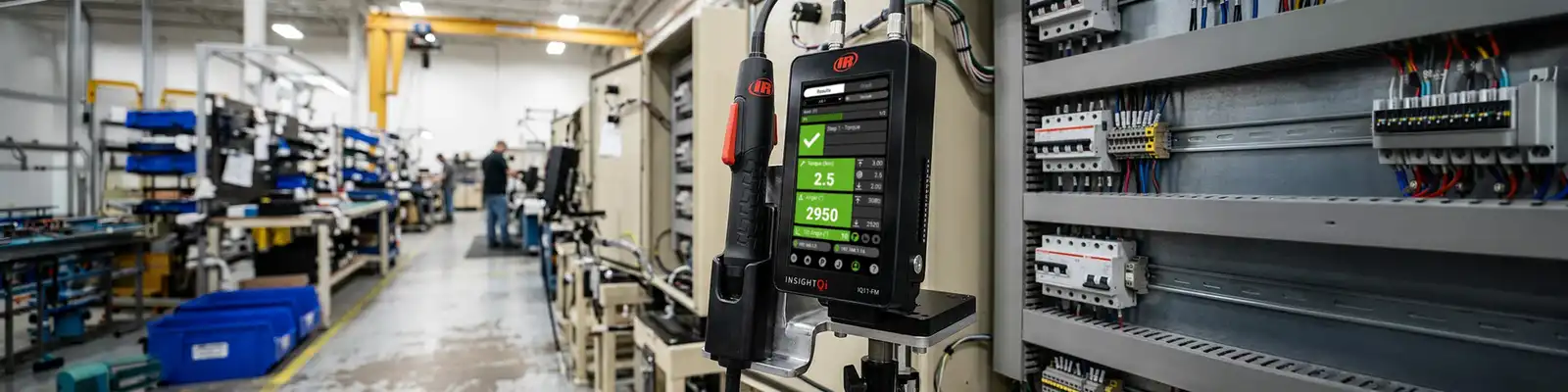
This team needed to restore UL compliance without disrupting high-volume electrical panel production

A manufacturer of infrastructure equipment identified fastening inconsistencies that risked UL certification. By implementing Ingersoll Rand IQI torque‑controlled systems, the team regained compliance, improved quality consistency, and protected revenue.

Key Facts

  • UL safety & compliance critical for shipment authorization
  • Up to $100,000/month revenue at risk
  • 8 IQI systems deployed with expansion potential
  • Rapid implementation with minimal operator disruption

*UL (Underwriters Laboratories) is a globally recognized safety certification indicating that a product has been tested and meets applicable safety standards.

Legacy fastening processes created compliance risks in safety critical electrical assemblies

The operation relied on non‑torque‑controlled tools in a high‑volume electrical panel assembly environment. As UL requirements tightened, the process exposed several risks:

  • Inconsistent torque application leading to variable clamp loads
  • Increased likelihood of stripped fasteners and rework
  • No real-time feedback or process validation
  • Manual workflows limiting repeatability and traceability

With UL certification directly tied to shipment eligibility, any audit failure would have forced a full production halt. The organization faced an immediate need to upgrade tooling without slowing throughput or introducing complexity.

The team deployed Ingersoll Rand IQI torque controlled systems to standardize fastening performance

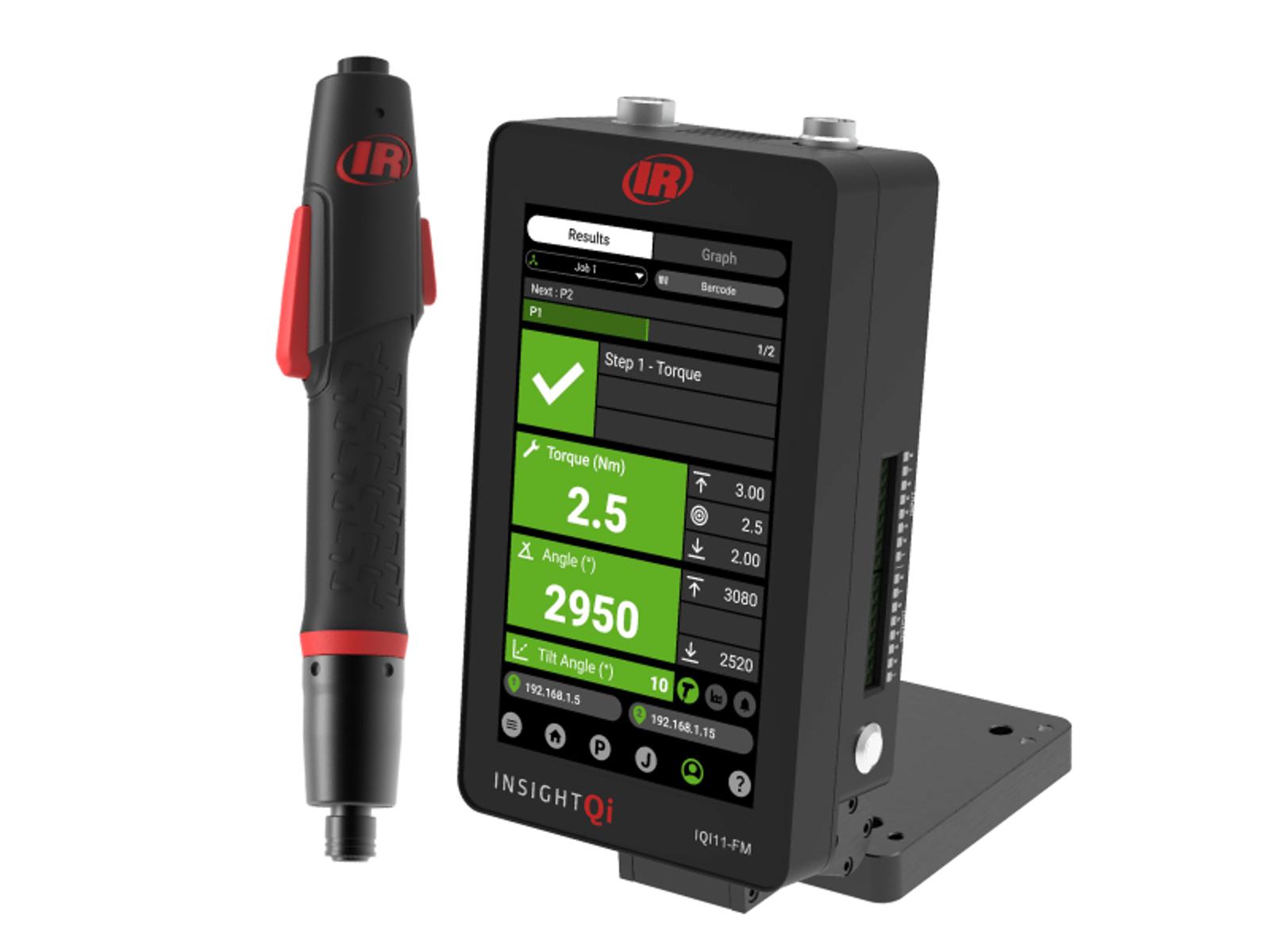
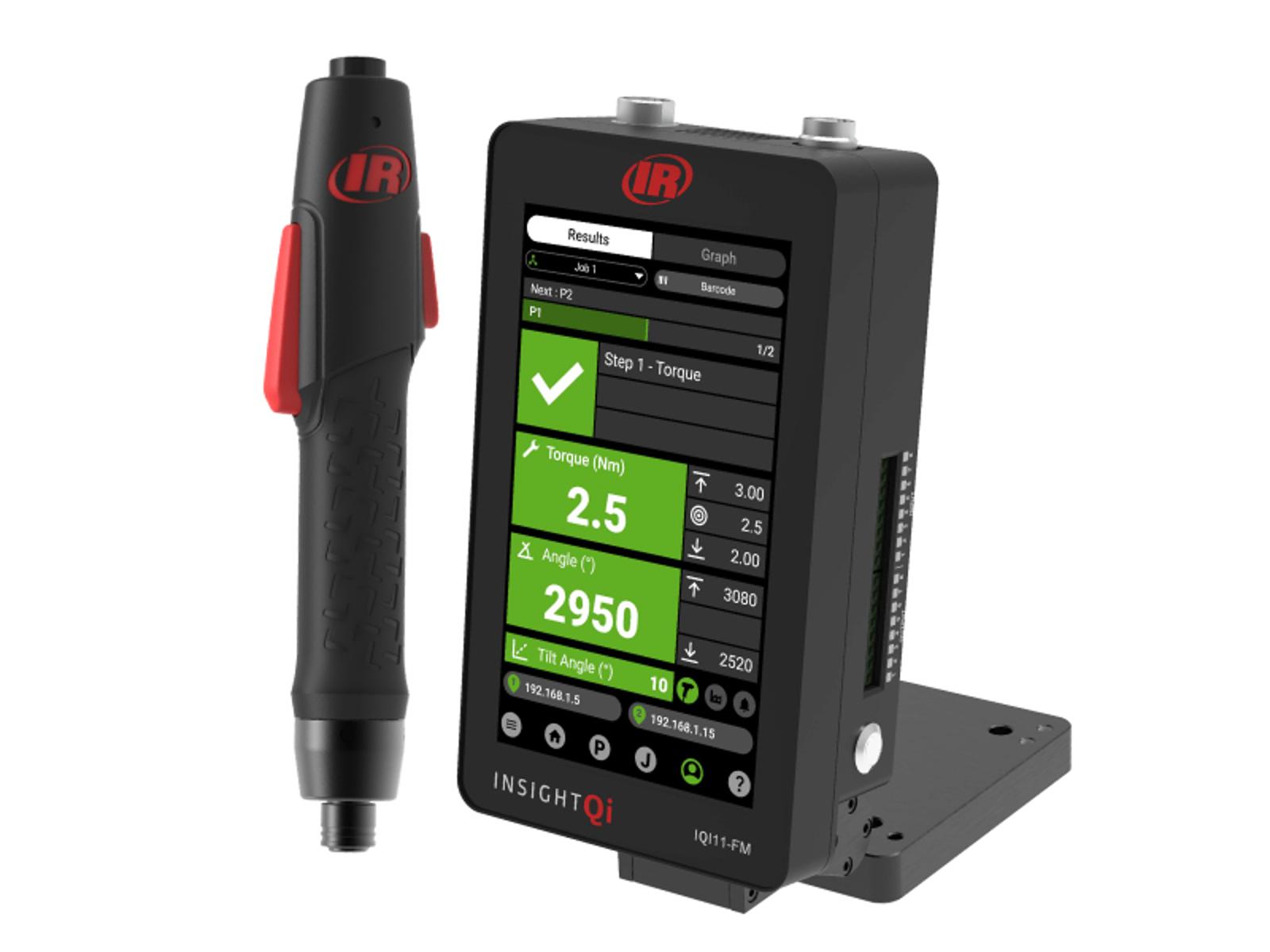
To address compliance gaps, the manufacturer evaluated multiple tightening solutions and selected Ingersoll Rand IQI systems for their combination of control, usability, and cost efficiency.

Implementation Highlights

  • Deployment of 8 IQI torque‑controlled systems in panel assembly
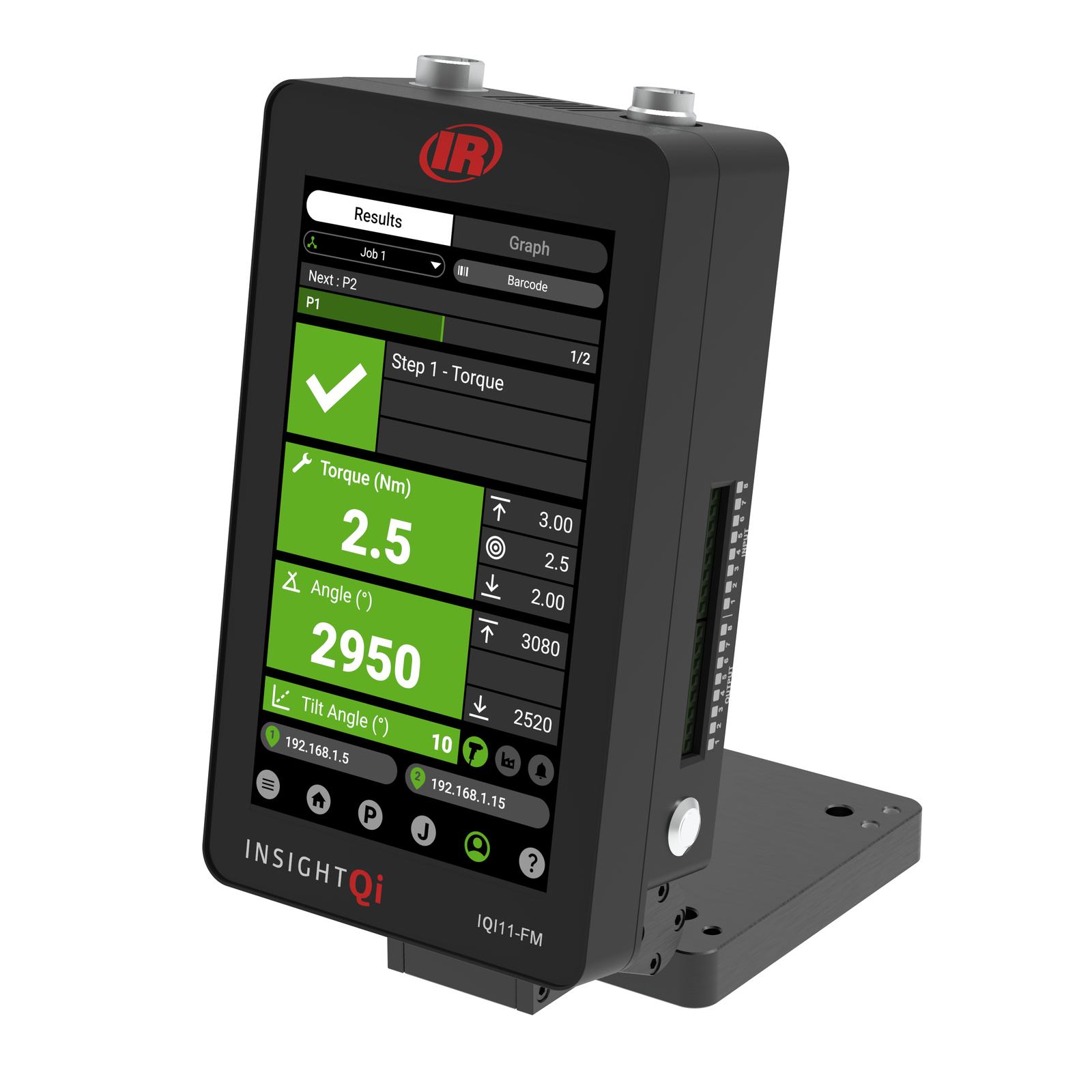
  • Integration of angle-based process control to ensure accurate tightening
  • Use of tilt-angle detection, enabling precise fastening without torque arms
  • Quick configuration by engineering teams using the built-in interface
  • Seamless operator transition due to intuitive tool design

Why IQI Was Selected

  • Eliminated need for external software or added infrastructure
  • Ergonomic design improved operator comfort and usability
  • Provided reliable torque and angle control for UL compliance
  • Competitive value compared to alternative DC electric systems

The simplicity of the IQI platform reduced setup time and allowed the team to meet compliance requirements within a tight timeline.

“We evaluated multiple options, and the IQI systems delivered better overall value. The interface was intuitive, there was no need for additional software, and the tools were easy for both engineering and operators to work with.”

—  Manufacturing Engineer

iqi_ensuring-assembly-quality-in-critical applications.png

The operation maintained certification, avoided downtime, and improved fastening reliability

Quantitative Outcomes

  • Maintained UL certification with no interruption to shipments
  • Avoided up to $100,000 per month in potential revenue loss
  • Reduced risk of stripped fasteners and associated rework

Qualitative Outcomes

  • Increased confidence in assembly quality and compliance
  • Strong operator preference for IQI ergonomics and usability
  • Faster setup and validation for engineering teams
  • Established a scalable platform for future expansion

“Operators preferred the feel of the IQI tools, and the tilt angle feature gave us confidence we could meet UL requirements without slowing down production.”

—  Manufacturing Leadership

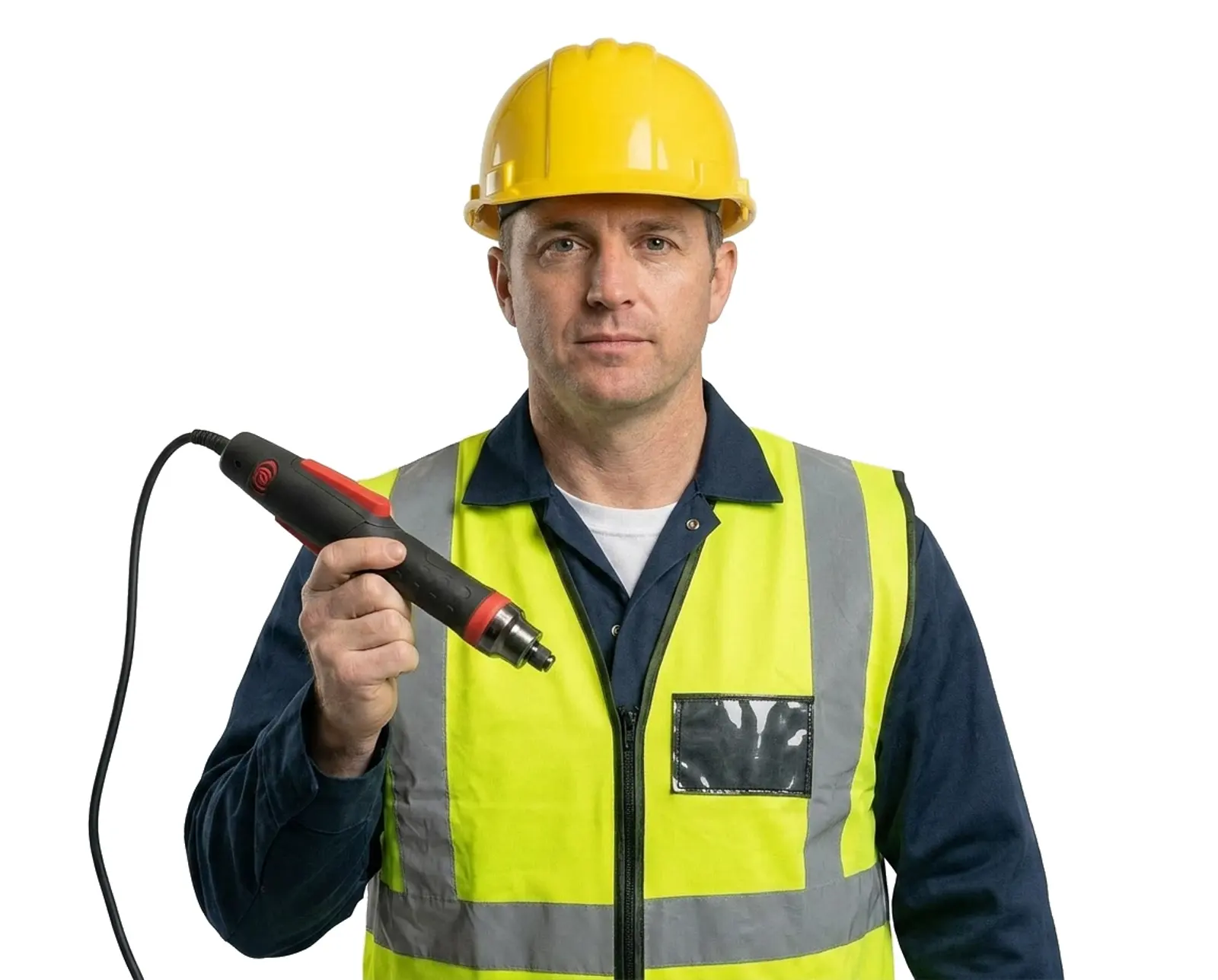
operator holding a corded iqi series electric screwdriver

Does this challenge resonate with your business?

Contact an Expert

Looking to improve fastening accuracy and maintain compliance? Connect with an Ingersoll Rand specialist to learn how IQI torque-controlled systems can help standardize assembly processes, reduce rework, and support regulatory requirements.