
Solar industry power tools support repeatable assembly, structural bolting, restricted-access fastening, and outdoor field service. Precision fastening systems, drills, impact wrenches, ratchets, grinders, and sanders help solar teams improve process control, productivity, traceability, and equipment availability. Across PV cell assembly, main body assembly, tracker installation, and maintenance, cordless and pneumatic tools manage varied torque requirements, confined joints, and demanding site conditions. Programmable fastening solutions also provide consistent tightening, visual feedback, and result reporting. This helps teams maintain greater control throughout installation and service workflows.

Solar Panel Main Body Assembly

The main body is the primary supporting structure on which PV panels are mounted. Each assembly can require up to 30 bolts, with fastening torque ranging from 40 to 105 Nm. Tool selection depends on joint count, specified torque, structural access, installation sequence, mobility, and result-verification requirements.

How it is used in solar industry

Installation teams position and align the supporting structure before mounting the PV panels. Operators then run down and tighten bolts across posts, rails, brackets, and connecting members. With as many as 30 bolts in one assembly, separately fastening, checking, adjusting, and correcting every connection can add process steps. Torque-controlled cordless tools allow operators to select the required program, complete the fastening cycle, receive status feedback, and record the result at the joint.

Solar RTS

Tools for Main Body Fastening

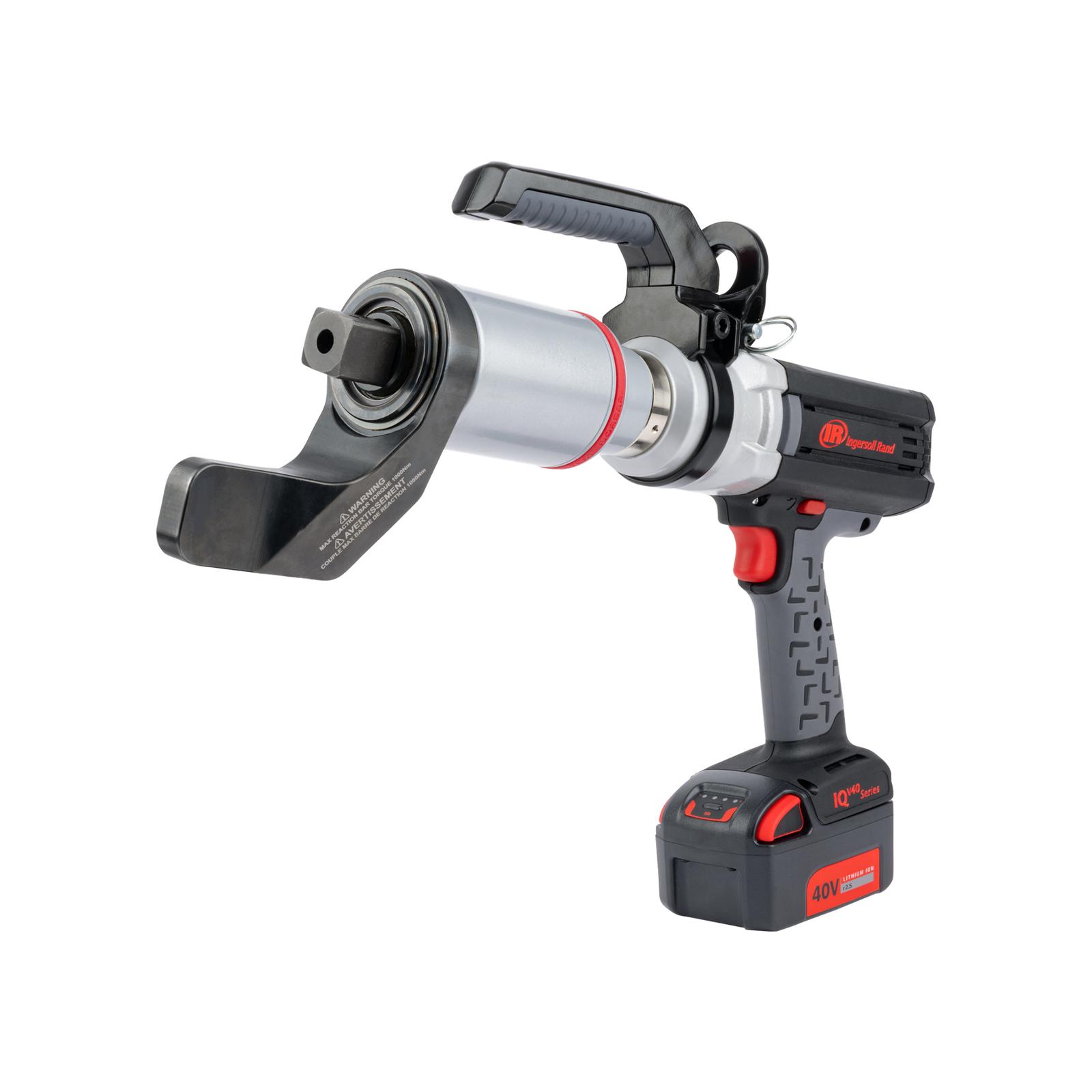
The QXXD High-Torque Angle Wrench provides controlled tightening, torque measurement, and result reporting. The RTS Connect Mechanical Pulse Tool handles repeated joints with controlled torque and low reaction, while the QX Series 40V Cordless Torque Multiplier completes higher-torque structural connections. Select the appropriate tool based on torque, access, joint design, and verification requirements.

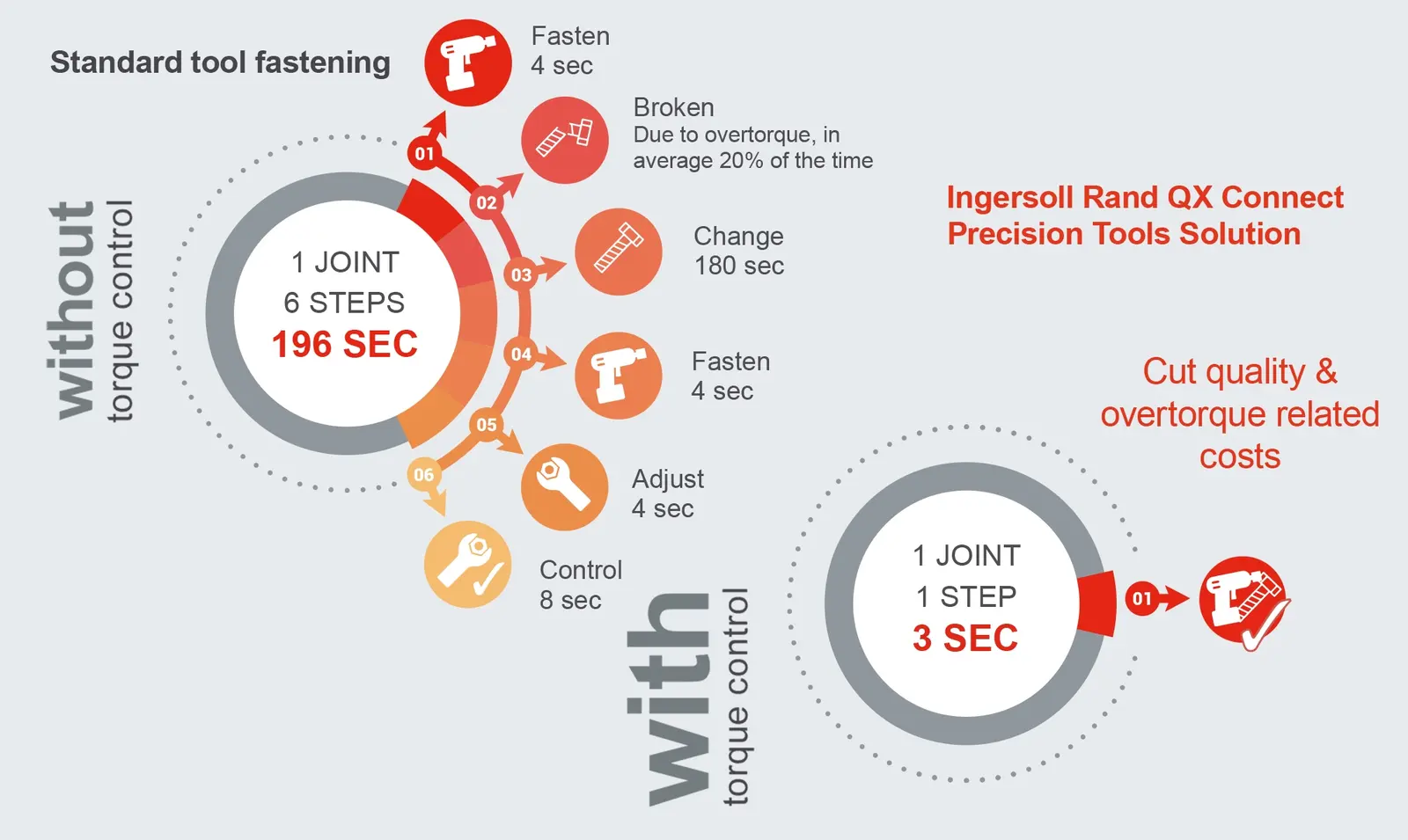
Cut Additional Cost & Improve Quality

Save Time and Money

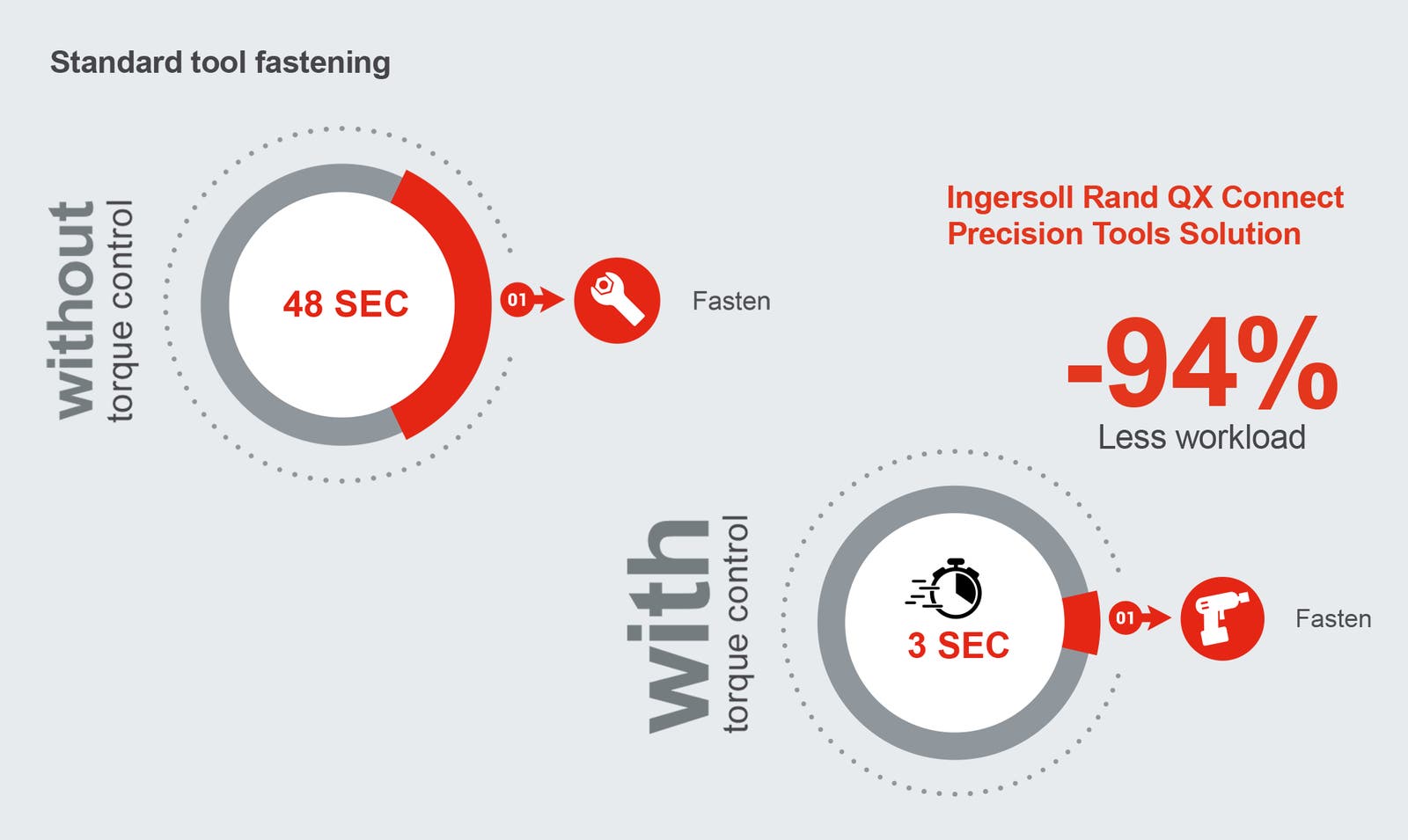
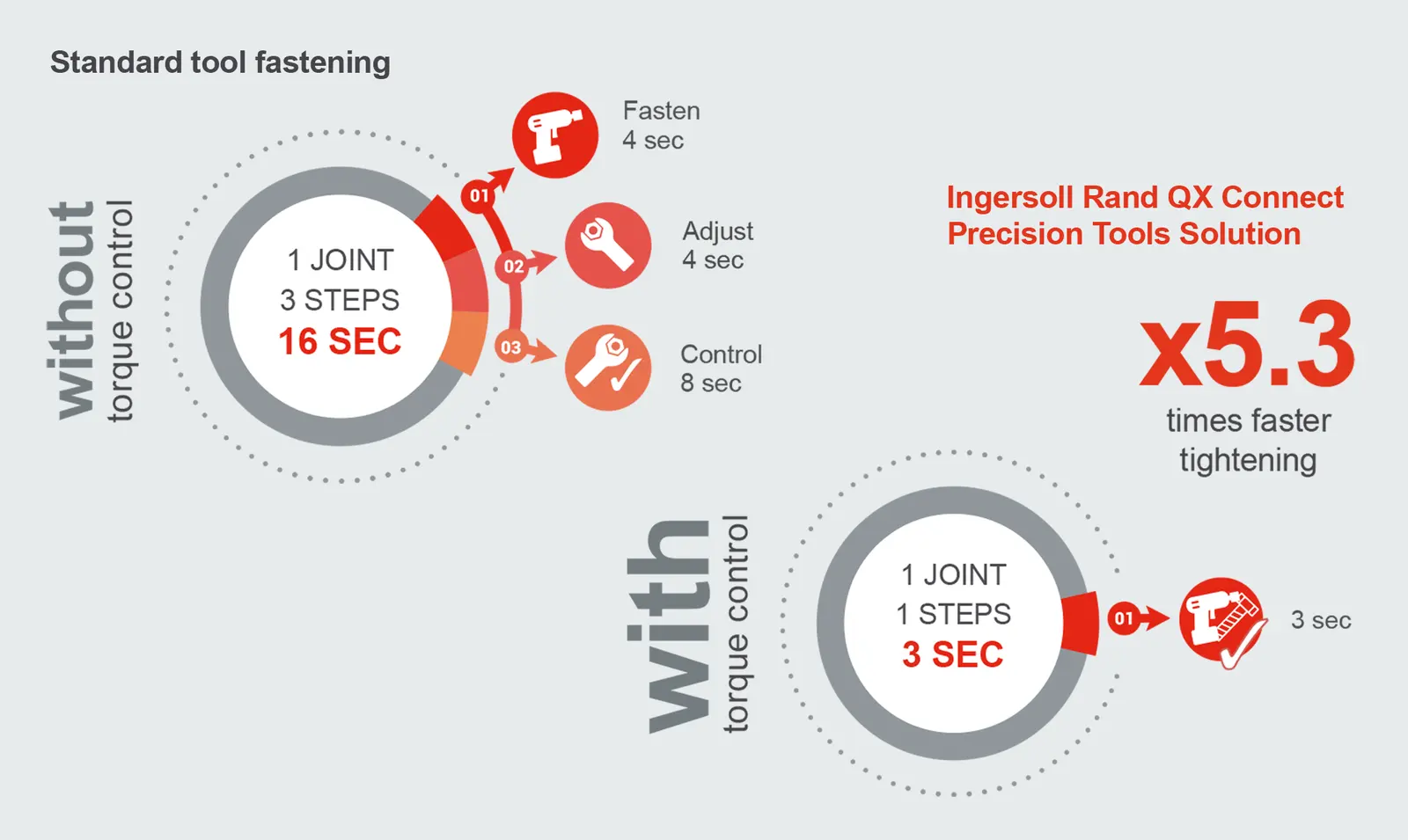
Simple fastening tools can cost time and money because operators need to fasten, check, and adjust every bolt. On average, 20% of bolts are overtightened, increasing the risk of deformation to PV panels, supporting structures, and bolts, as well as additional quality costs. A torque-controlled workflow combines tightening and verification to improve consistency and identify results outside programmed limits.

Cut Additional cost & Improve quality

Compact PV Cell Assembly

PV cell structures are becoming more compact, making critical fasteners increasingly difficult to access. Assembly can involve frames, supports, housings, and closely positioned components. Selection factors include joint location, available clearance, torque range, attachment geometry, component sensitivity, fastening accuracy, and traceability requirements.

How it is used in solar industry

Operators position and secure components where frames, panels, and nearby parts can obstruct direct access to a fastener. A conventional straight tool may require repositioning or additional manual work. Customized access solutions help operators reach confined joints while an integrated torque-control system manages tightening. This combination is particularly relevant around high-value PV components, where precision tightening helps reduce the risk of damage associated with overtightening or incorrect joint seating.

solar_qx_web

Tools for Confined PV Fastening

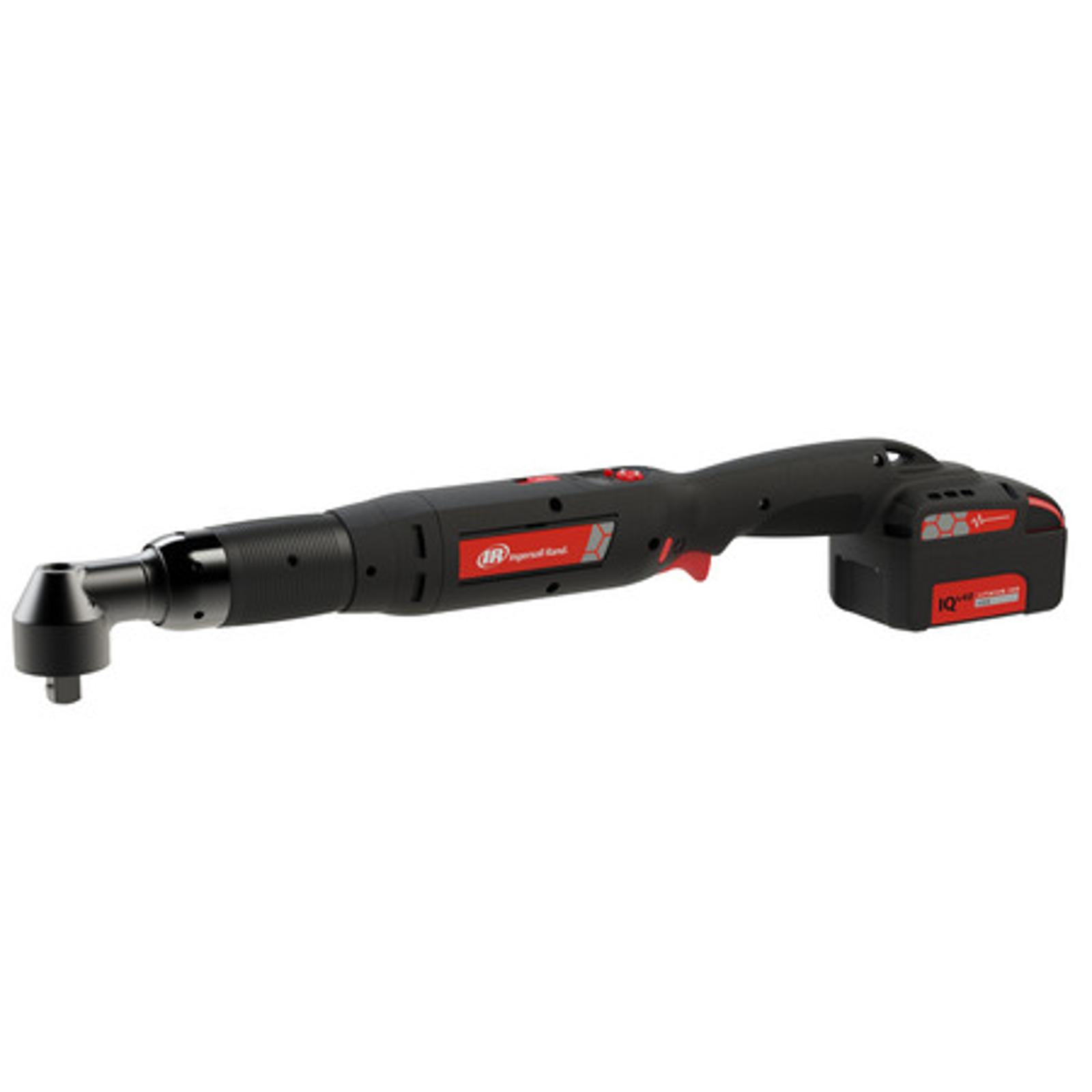
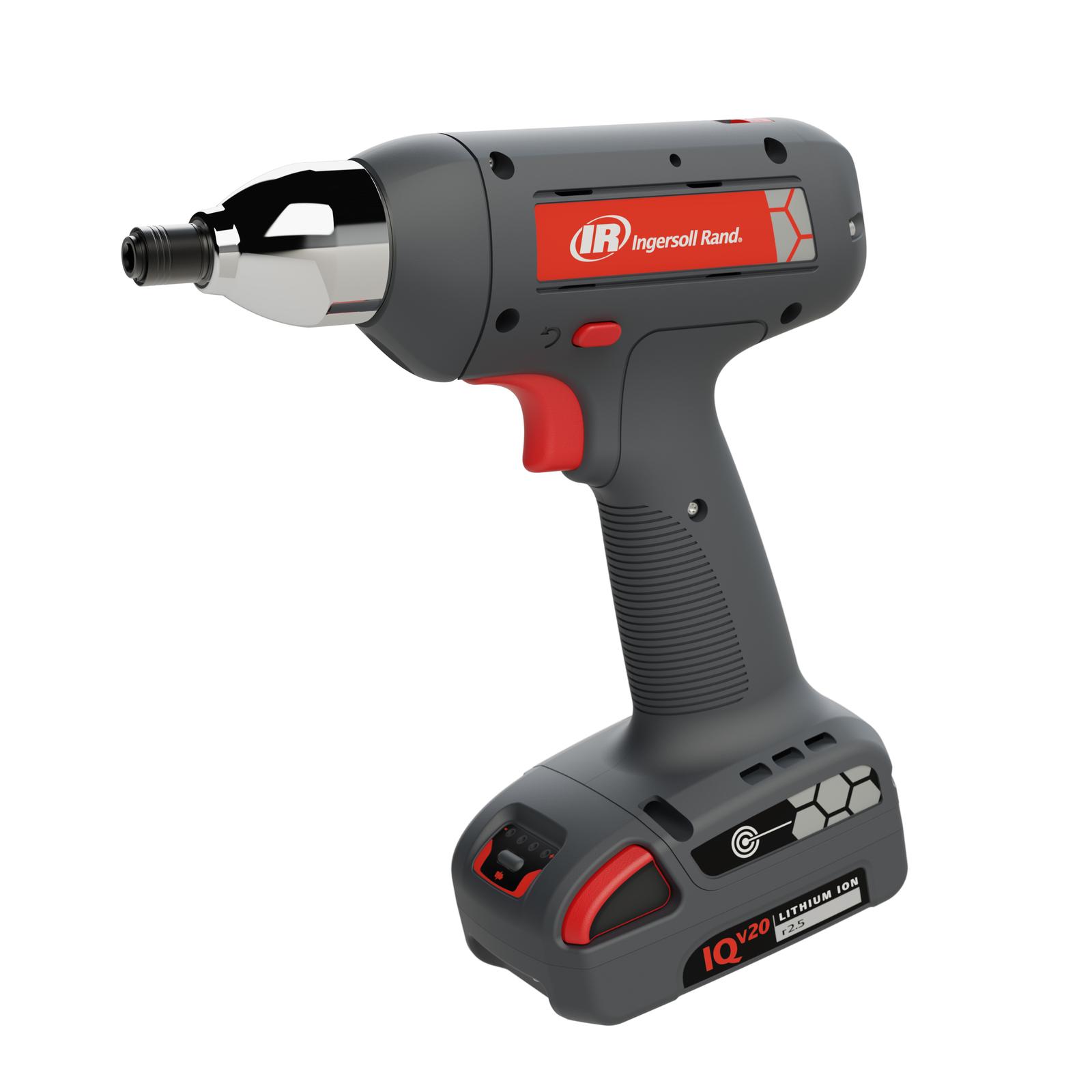
Pistol-grip tools, such as the QX Connect Pistol-Grip Precision Screwdriver, suit accessible, forward-facing joints. Angle tools, such as the QX Connect Cordless Angle Wrench/Nutrunner, reach fasteners obstructed by nearby structures. A customized crowfoot attachment extends access where a standard tool head cannot align with the bolt. The attachment, torque correction, reaction method, and fastening program should be validated for the joint.

Access any bolt, anywhere

Easy Access to the Tightest Places

The Crowfoot is a metallic attachment mounted directly on the fastening tool, enabling access to bolts in confined areas where a standard tool head cannot align. Combined with the tool’s built-in torque-control system, the customized solution brings access, precision tightening, and cycle verification into one workflow, helping operators tighten correctly the first time.

Access any bolt, anywhere

Sun Tracker Unit Fastening

Sun tracker units rotate PV structures toward the sun to optimize the operating position of the cells. Assemblies can include torque tubes, bearings, rotating frames, motors, gearboxes, drive components, and module supports. Selection depends on torque, joint design, access, reaction management, mobility, and verification requirements.

How it is used in solar industry

Installation teams join tracker sections before securing torque tubes, bearings, motors, gearboxes, and drive components. These mechanically active structures require controlled assembly to maintain their intended alignment and movement. Fasteners can sit beneath modules or between closely spaced members, while different tracker sections can require different torque levels. Operators therefore need the appropriate torque capacity, drive size, tool configuration, reaction support, and cordless mobility for each connection.

Sun Tracker Unit

Tools for Sun Tracker Unit Fastening

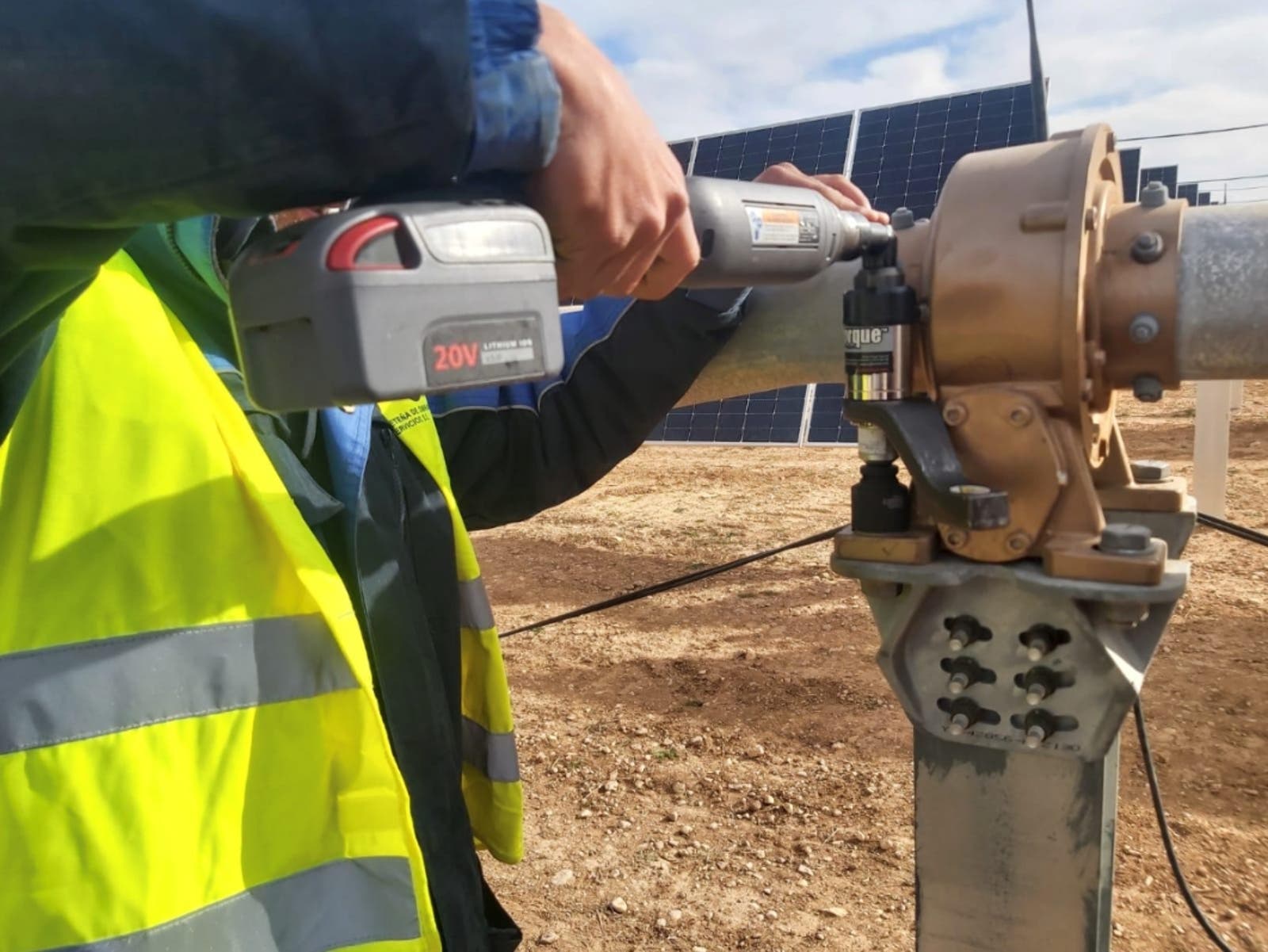
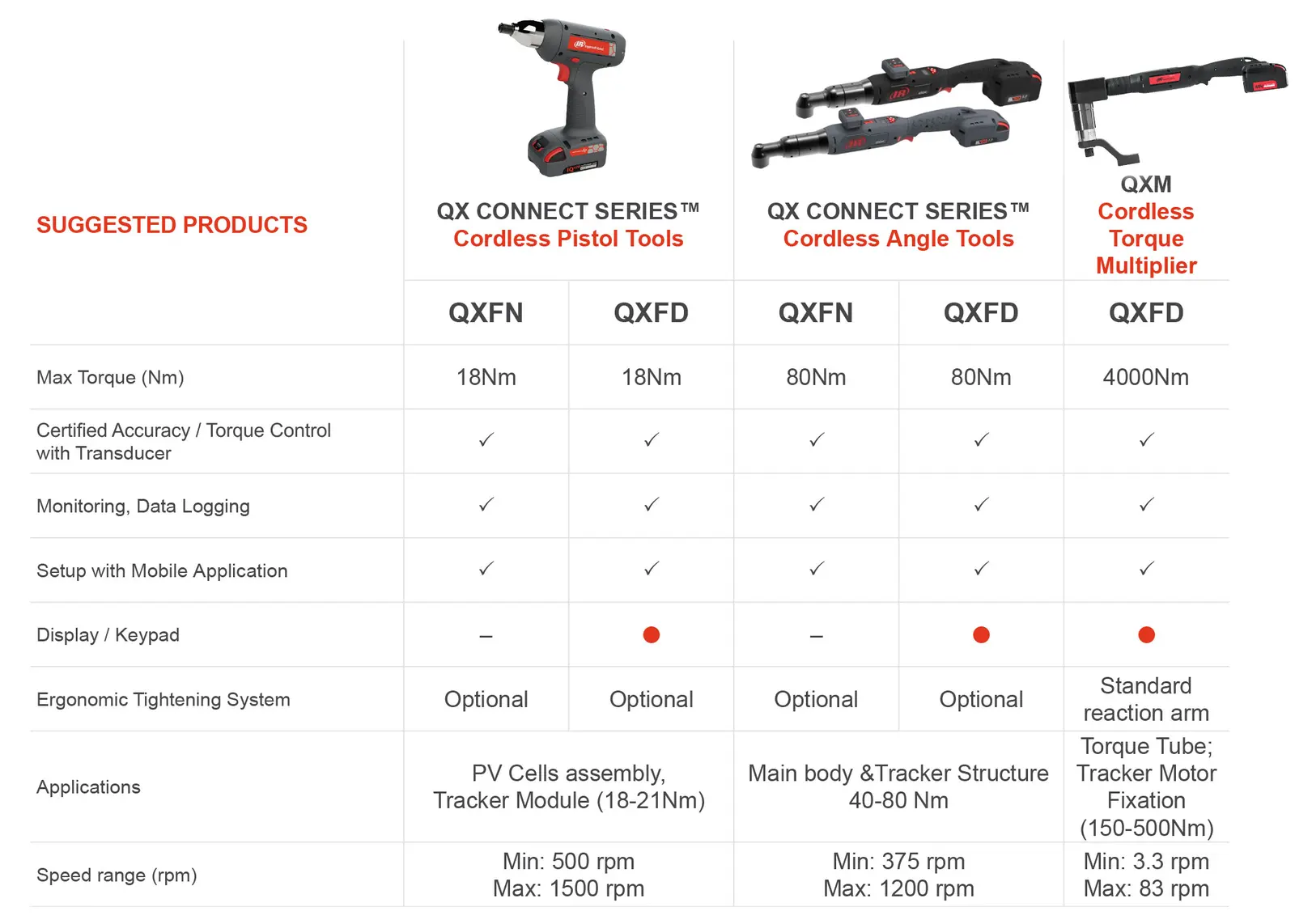
The QX Series 40V Cordless Torque Multiplier handles higher-torque connections on torque tubes and drive structures. The QXXD High-Torque Angle Wrench provides controlled fastening at restricted structural joints, while the QXXD Pistol-Grip Precision Screwdriver fits accessible tracker-module and motor-fixation connections. Select each tool according to torque range, access, reaction requirements, and reporting needs.

Controlled Fastening for Sun Tracker Units

Sun tracker units combine accessible module joints, restricted structural connections, and higher-torque fastening around torque tubes, motors, and drive components. Matching pistol-grip, angle, and torque-multiplier configurations to each joint supports controlled fastening, traceable results, and efficient movement across the tracker assembly.

QX connect series

Solar Panel Inspection and Maintenance

Solar maintenance includes joint inspection, corrective tightening, orientation checks, deformation detection, component replacement, and tracker servicing. Technicians can encounter several joint types during one inspection route. Selection depends on required torque programs, accessibility, measurement and reporting needs, battery runtime, and the approved maintenance procedure.

How it is used in Solar Industry

Technicians inspect main-body structures, PV assemblies, tracker units, motors, and mechanical connections. A maintenance cycle can require measuring a joint, correcting its condition, verifying the completed result, and reporting the work. Carrying a separate tool for every joint type increases the equipment required across the site. A programmable cordless platform can cover compatible joints while supporting program selection, controlled fastening, result storage, and reporting within one inspection workflow.

Solar Panel Maintenance

Tools for Joint Maintenance

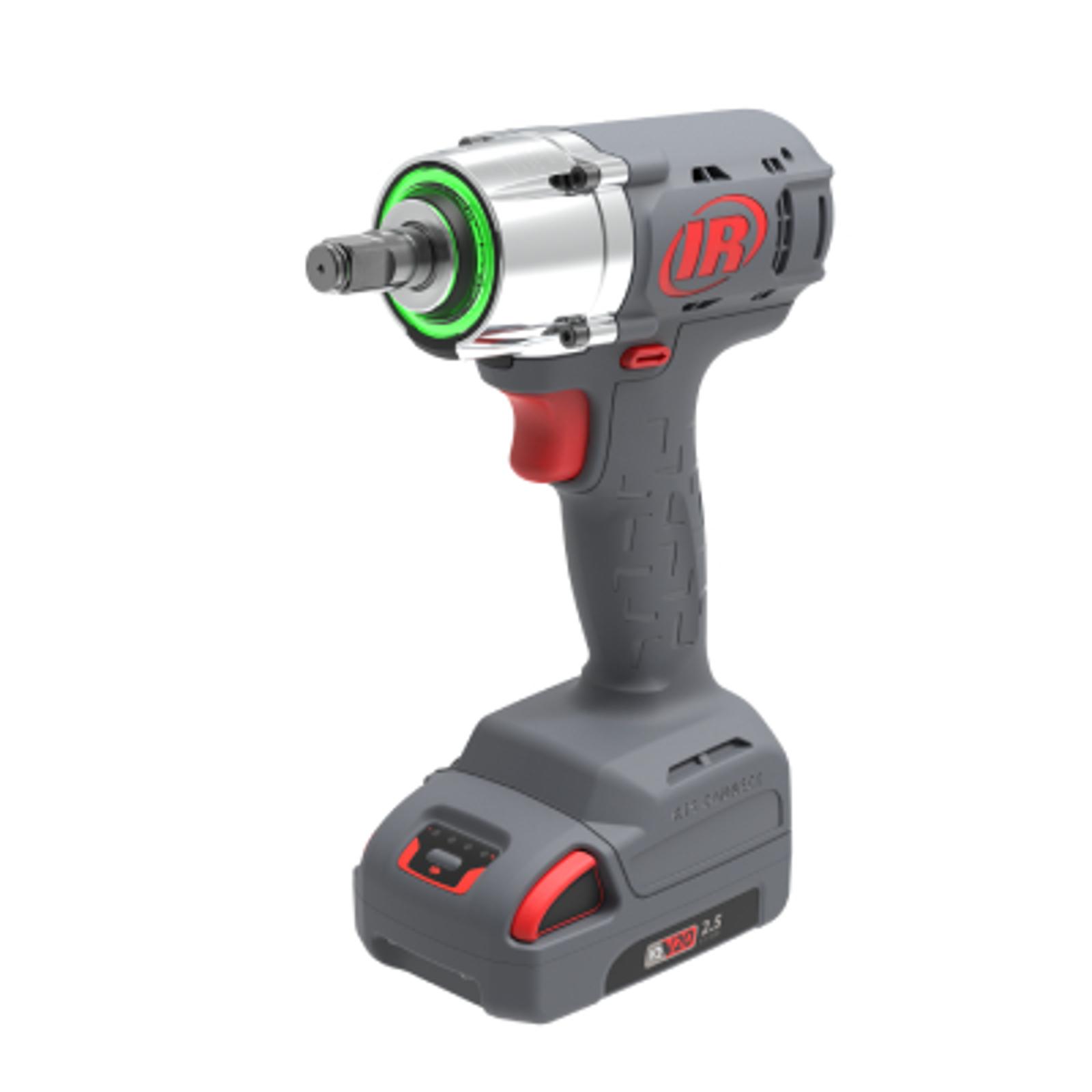
The QXXD Cordless Precision Screwdriver handles programmed tightening, result monitoring, and quality reporting. The QX Limitless Cordless Nutrunner provides connected torque-and-angle control for compatible joints, while the RTS Connect Mechanical Pulse Tool supports repeated fastening with programmable settings and clear cycle confirmation.

5 times faster tightening with quality record

Tighten and Go

With QX precision tools, operators can set the required torque program through the compatible mobile app or directly on the tool display, then begin controlled tightening. The selected program supports accurate, repeatable fastening while creating a quality record for the completed joint. Plus, operators can monitor tightening data with ease and precision.

Ingersoll Rand QX Connect Precision Tools Solution

The Ingersoll Rand Advantage

Bringing Strong Value and Benefits to the Whole Organization

Ingersoll Rand fastening technology helps simplify solar assembly and inspection workloads, giving project, finance, operations, and quality teams greater control over the tightening process.

  • Project Manager: Meet Your Project Goals - QX Connect precision tools help solar installation teams work toward project deadlines while supporting consistent fastening quality and cost control across main-body structures, PV assemblies, and sun tracker units.
  • Investor: Support ROI Efficiency - Correct torque is important for solar panel and support structures exposed to changing operating and weather conditions. Controlled fastening helps limit rework, quality issues, and unnecessary project costs while supporting reliable installation.
  • Finance Manager: Improve Productivity and Reduce Costs - Disruptive fastening technology helps streamline solar assembly by reducing separate tightening, checking, and adjustment steps. Greater process control can help manage overtorque-related quality costs and improve project productivity and profitability.
  • Operator: Use the Right Tools for the Work - One programmable QX precision tool can cover multiple validated joints, provide clear visual feedback, and store up to 32 tightening programs, helping operators move between compatible solar fastening applications with fewer tools.
  • Quality Controller: Easy and Accurate Torque Monitoring - Controlled torque is essential when fastening PV panels, structural supports, and tracker assemblies. QX Connect tools help quality teams monitor torque accuracy and log tightening results to confirm that completed joints meet the programmed fastening requirements
  • Measure, Fasten, and Report in One Workflow - QX Connect combines tightening, measurement, status feedback, and result reporting. This helps reduce separate inspection steps and gives teams greater visibility into completed fastening operations.
  • Identify Fastening Issues More Easily - Programmed limits and tightening data help teams recognize results that require further inspection, including possible overtightening, incorrect orientation, or deformation-related conditions.
  • Connected Control Across Solar Applications - Tool-display programming, compatible mobile applications, wireless communication, and fastening records support controlled work across main-body assembly, compact PV structures, sun tracker units, and maintenance operations.

Frequently Asked Questions

Solar industry power tools are commonly used for module and component assembly, mounting structure construction, tracker installation, and solar plant maintenance. Tasks include drilling, bolt rundown, controlled tightening, component removal, corrosion treatment, surface preparation, and structural repair.